









Plastic masking film: which one for which job?
 24 March 2022
24 March 2022
24 March 2022
Perfect masking leads to a faultless painting project. Of course, you have to be sure of the products you're using. In this article we will focus on plastic masking film, a real must have.
Choosing different masking films for different spots or purposes can be a next-level improvement, when it comes to professional painting. Q1® Premium Masking Solutions gives you 3 different types of plastic masking film:
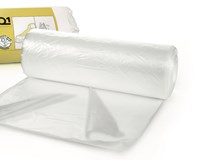
Q1® Cover All Dust Sheet is the right choice for furniture and floor protection from overspray, dust and spills. Thanks to an exclusive patented system it is faster and easier to unfold and open out compared to other products.
The plastic film is electrostatically charged so that it doesn’t slip or flutter when you pass by. The electrostatic charge is the result of a process known as “corona treatment”, which guarantees two advantages:
 Read our customers’ opinion:
I recently had a job in a house that was still being renovated and since I could not remove the furniture from the room I moved it all to the centre and covered it with this cloth. The sheet is very large so one was enough and I protected everything not only from the paint but also from the dust that was floating around the house. - Pete
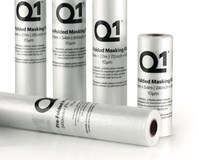
Q1® Pre Folded Masking Film, thanks to its static cling, adheres easily and steadily on the surfaces and stays in place during paint spraying.
This plastic masking film too is provided with corona treatment, to protect surfaces from paint overspray and flaking.
 Read our customers’ opinion:
I ordered these to cover windows while painting the outside of the houses I decorate. They are heavy enough that the windows are well protected, but light enough that I can tape them up quite simply with high adhesive masking tape. I would recommend them to keep the place tidy during any paint job. - Jonathan
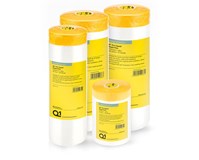
Q1® Pre Taped Washi Film is the game changer that will make you save time in masking large or small surfaces.
It’s suitable for both indoor and outdoor use and is removable without a trace of adhesive residue for up to six months after use (indoor only).
This painting masking film is available in a variety of sizes to adapt to any kind of surface, from walls, to doors, to even the smallest windows, always creating razor-sharp lines.
 Read our customers’ opinion:
I used it together with the multiple purpose tape from Q1. No paint leaks and pulled off clean. A real time saver! - Adam
The application method can be adapted to the area you need to protect. In every case, the surfaces used to anchor the film should be clean and dry, and the masking tape should be suitable for the substrate.
A dedicated masking film dispenser makes large sheets of film easier to handle and helps keep application controlled while working. The Q1® Masking Film Dispenser is designed for use with Q1® Pre-Folded Masking Film, allowing the film to be dispensed directly from the roll and cut to the required length with the integrated blade.
Using a dispenser is particularly useful when masking large areas such as walls, floors, furniture or openings: it keeps the roll organised, simplifies measuring and cutting, and reduces unnecessary handling of the film during application.
Q1® designed several solutions to make you save time and money, while creating astonishing paintworks.
Let’s get in touch.
Keeping excellent masking products in your shop means selling efficiency and high productivity to your customers. Join the Q1® family to watch your business grow.